
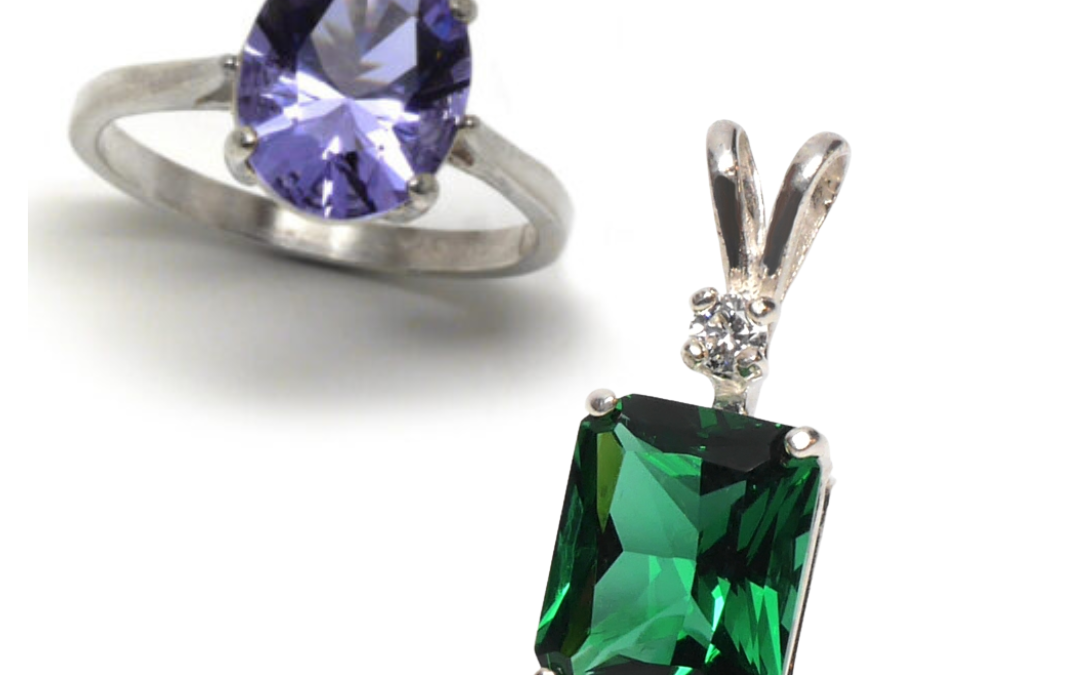
What is emerald obsidianite?
The 1980 Mt. St. Helen’s volcanic eruption left behind 540 million tons of ash over an area of southwest Washington. Salvage workers were using acetylene torches to cut through metal debris. During this action, they discovered that the torch melted the volcanic ash into this gorgeous green drip. They found that these results could be replicated in a lab setting by heating the ash to 27℉ and then rapidly cooling it. This material then became the beautiful and glitzy gemstone that we know today as Mt. St. Helens Emerald Obsidianite.
What is twilight obsidianite?
Emerald obsidianite has trace amounts of iron, copper, and chromium. After years of experimentation, they found a way to remove some trace elements from the rock dust and the remaining elements of manganese, potassium, titanium, and cobalt. This chemical change gave the twilight obsidianite its color-changing blue/purple color. It displays purple under natural and incandescent light, and blue under fluorescent light.